Is CPU or RAM more important for virtualization?
If you want to run a virtualized environment, you should put the emphasis on more (as in, several) rather than big (as in, powerful or fast). In other words, more cores are better than big/fast cores. Likewise, more Random Access Memory (RAM) is preferable to better/faster RAM.
RAM is essentially the core of any computer or smartphone and in most cases, more is always better. RAM is as significant at the processor. A right amount of RAM on your smartphone or computer optimizes performance and the ability to support various types of software.
Selecting the right CPU for virtual infrastructures depends on many factors, including feature sets and hardware specs. Proper configuration of processor resources is also crucial. Choosing a CPU for virtualization and configuring it properly are just as important as choosing memory, storage and network resources.
Sufficient RAM prevents the main system and virtual machine from fighting over hard drive access. When information is stored in the system RAM, the CPU has an easy time accessing it quickly; however, data calls to the hard drive are comparatively slow.
Hardware Requirements
64-bit Processor with Second Level Address Translation (SLAT). CPU support for VM Monitor Mode Extension (VT-x on Intel CPU's). Minimum of 4 GB memory. As virtual machines share memory with the Hyper-V host, you will need to provide enough memory to handle the expected virtual workload.
Intel i9-12900K is not only a great CPU for Virtualization but also the best CPU to use with desktop computers. Features of Intel Core i9-12900K: 16 Cores – 8 Performance + 8 Efficient cores.
The CPU is the brain of a computer, containing all the circuitry needed to process input, store data, and output results. The CPU is constantly following instructions of computer programs that tell it which data to process and how to process it. Without a CPU, we could not run programs on a computer.
The processor, also known as the CPU, provides the instructions and processing power the computer needs to do its work. The more powerful and updated your processor, the faster your computer can complete its tasks. By getting a more powerful processor, you can help your computer think and work faster.
For gaming, there are advantages to running RAM with high-rated speeds. Although it won't have as profound an effect as upgrading the processor or graphics card, faster RAM can improve game performance and frame rates.
A good starting point is to allocate 1GB for 32-bit Windows 7 or later desktops and 2GB for 64-bit Windows 7 or later desktops. If you want to use one of the hardware accelerated graphics features for 3D workloads, VMware recommends 2 virtual CPUs and 4GB of RAM.
Does RAM speed matter for virtualization?
I believe both your Hyper-V host or the virtual machines will "barely" notice the difference in the RAM speeds, virtual machines consume memory (RAM), so I would suggest having more RAM instead. Unless you really run some very high intensive software, you could consider choosing faster RAM, but this is highly unusual.
8 GB RAM should be good for most situations. With 4 GB you can have a problem, depending on what you intend to do with the client OS and what else the host will be used for. Most client operating systems will need at least 1 GB RAM but that only for light use. Modern versions of Windows will want more.
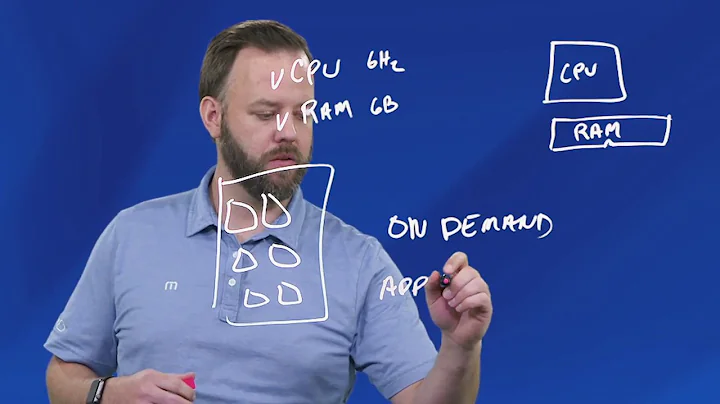
Microsoft recommends using one core per virtual machine. Depending on the application running, we have experienced the need to run up to two cores per virtual machine (e.g. in the case of remote desktop services for a SQL-based ERP system).
Virtualization workstation
These workstations don't require much graphical power, but it's going to be a CPU and RAM hog, so the most important components to focus on are selecting maximum CPU cores and maximum RAM.
Each virtual machine consumes memory based on its configured size, plus additional overhead memory for virtualization. The configured size is the amount of memory that is presented to the guest operating system. This is different from the amount of physical RAM that is allocated to the virtual machine.
Hyper-V itself needs about 300 megabytes of memory for its own process. For each virtual machine, any memory amount up to the first megabyte requires 32 megabytes of overhead.
With VMWare server and 4 gigs of ram you probably wont get more than 2 or 3 VMs going on it. If you were using ESXi you could probably get 4 or 5 easy even with one processor.
Virtual Machine Requirements
You generally must have a fast enough processor, enough RAM and a big enough hard drive to install the system and application software you want to run, just as you would if you were installing it directly on your physical machine.
The Worlds' Most Powerful Desktop Processors
The AMD Ryzen™ Threadripper™ 3970X and 3960X are the most powerful high-end desktop processors AMD has ever produced, with 64 cores, 128 threads, and an astonishing 288MB of combined cache.
...
Best CPU for 3D Rendering.
| CPU Name | AMD Ryzen 5 2600 |
|---|---|
| Cores | 6 |
| GHz | 3.4 |
| Cinebench R15 | 1307 |
| Price($) | 115 |
What is the fastest CPU in the world?
A 64-Core TR 3990X Is Faster Than A 16-Core 5950X
AMD's 64-core, with 128 threads, Ryzen ThreadRipper 3990X desktop PC processor is considered the world's fastest CPU in 2021. The CPU features a 2.9 GHz base clock and a 4.3 GHz max boost clock that facilitates multitasking and fast load times.
However, since the brain is the central processing center in your body, directing the greatest number of organs and processes – it is also the most important. Your brain is the CPU in your body. The CPU is the brain in the computer.
Explanation: The most important of these components is the central processing unit (CPU), or microprocessor, which acts as the "brain" of your computer. Another component is random access memory (RAM), which temporarily stores information that the CPU uses while the computer is on.
Computer random access memory (RAM) is one of the most important components in determining your system's performance. RAM gives applications a place to store and access data on a short-term basis. It stores the information your computer is actively using so that it can be accessed quickly.
As far as phones and tablets go, there's been a race to the top recently when it comes to RAM. So although you reasonably only need 4 GB of RAM on your Android or iPhone, the standard for newly released smartphones is 8 GB. And unless you're really tech savvy, you can't upgrade your phone's RAM.
The more RAM you have, the faster you can access data, which makes the CPU faster. But it won't decrease the CPU usage. The RAM isn't only storage that helps the CPU access files more quickly, but it allows the CPU to run more processes simultaneously.
If RAM is the temporary memory, you can think of the CPU as the brain of the computer. The CPU chip retrieves data from the RAM. The chip takes those instructions and begins to move and process data through the motherboard in the correct order to its next designated location.
The GPU is the most crucial piece of hardware for gaming. However, you get the best gaming experience when you have the right CPU, GPU, RAM, and monitor working together. A balanced configuration avoids bottlenecks and gives you an optimal frame rate.
In most situations, 32GB of RAM can be considered overkill, but this is not always true. There are situations where 32GB is an appropriate amount to have. It is also a good way to futureproof your PC as requirements increase with time.
The GPU is an extremely important component of a gaming system, and in many cases, even more crucial than the CPU when it comes to playing certain types of games. Simple description: A GPU is a single-chip processor that's used chiefly to manage and enhance video and graphics performance.
Is 32 GB RAM enough for virtual machines?
Yes 32GB would be recommended however if it is just 1 VM and you are not doing anything intensive on it, you will be fine with 16GB.
The host system must have enough memory to run the host operating system, the guest operating systems that run inside the virtual machines on the host system, and the applications that run in the host and guest operating systems. The minimum memory required on the host system is 2 GB. 4 GB and above is recommended.
Explanation : The minimum CPU requirement for running Hyper-V is a x64-based processor (Itanium is not supported), hardware Data Execution Protection must be enabled, and hardware-assisted virtualization must be enabled. There is no minimum requirement for a dual-core processor.
Virtual Box Manager will warn you whenever you assign more than 50% of RAM to a virtual machine, but in case we have plenty of RAM this is a rule of thumb recommendation only. Of course we can assign more than 50% of the system RAM to our VM as long as we have enough RAM left for our host OS.
Explanation: Not all CPUs support virtual machines and many that do require that you enable this support in the BIOS. 3. Which of the following type of virtualization is found in hypervisor such as Microsoft's Hyper-V? Explanation: It is the host operating system that is performing the I/O through a para-API.
the RAM assigned to the VM will only be used when you fire up the VM and should be freed once you power it down. Same for the RAM VirtualBox itself uses to run, which should be freed when you exit the VirtualBox application itself.
A general rule of thumb is to run four virtual CPU (vCPU) VMs per physical core, but again, specific workloads may have differing requirements.
The maximum number of virtual processor sockets assigned to a VM is 128.
When you see 100% utilization on both VMs, you are talking about each VM always wanting as much CPU as it can get. Typically, they will each get close to 50% of the available CPU.
On average, you should see four to six vCPUs per physical core. If every VM has one more vCPU than it needs, you are only getting two to three vCPUs per core.
Which of the following are the most important resources on a virtualization workstation?
Which of the following would be the MOST important factor to consider when building a virtualization workstation? Explanation: Virtualization requires a lot of memory and processing power. If you install 2 or 3 operating systems, you will be needing memory and processors to keep them running in optimal condition.
Which of the following is required by a virtualization workstation? B. Maximum RAM and CPU cores are the primary requirements for such systems. Although there are multiple guest operating systems, generally there is but one host to those guests.
Virtualization relies on software to simulate hardware functionality and create a virtual computer system. This enables IT organizations to run more than one virtual system – and multiple operating systems and applications – on a single server. The resulting benefits include economies of scale and greater efficiency.
A good starting point is to allocate 1GB for 32-bit Windows 7 or later desktops and 2GB for 64-bit Windows 7 or later desktops. If you want to use one of the hardware accelerated graphics features for 3D workloads, VMware recommends 2 virtual CPUs and 4GB of RAM.
Yes 32GB would be recommended however if it is just 1 VM and you are not doing anything intensive on it, you will be fine with 16GB.
As long as you don't have any other physical processor in your system, do not assign more than 1 processor to your virtual machine. You can assign more or fewer cores to your guest os, depending on your needs, but you shouldn't assign a value higher than your hyperthreading cores.
Virtualization workstation
These workstations don't require much graphical power, but it's going to be a CPU and RAM hog, so the most important components to focus on are selecting maximum CPU cores and maximum RAM.